Ebook Download
Currently, your time is to develop the various atmosphere of your day-to-day live. You could not feel that it will be so quiet to know that this book is absolutely your own. And exactly how you could await the book to read, you could simply locate the web link that has been supplied in this site. This website will certainly offer you all soft duplicate fie of the book that can be so easy to learn about. Associated with this problem, you can truly recognize that guide is linked always with the life as well as future.

Ebook Download
Success can be begun by process. Among procedures that are really immediate and crucial is by reviewing books. Why should be reading? Reviewing turns into one the most convenient means to reach the knowledge, to enhance the experiment, and to get the inspirations easily. Guide that should be read are also various. But, it will certainly depend on the situations that relate to you.
Boredom of checking out book specifically is felt by some individuals, additionally those that are not fond of this activity. However, it will certainly intensify of their problem. One of the manner ins which you can get is by starting reading. Easy and easy book can be the material as well as resource for the novice. As this publication, you could take as the inspiring reading material for both novice and also reading fans. It will certainly realize the chances of loving books growing much more.
Even there are numerous books to pick; you might really feel so difficult to choose which one that is extremely proper for you. However, when you still feel confused, take the as your recommendation to read currently. The soft file will certainly interest in the exact same things with the print documents. We provide this publication is only for you who intend to attempt analysis. Even you have no analysis routine; it can be starter means to enjoy analysis.
To get this publication, it will be so easy. This moment, you have been in the right internet site. We are the internet book library that gathers many book collections from numerous brochures as well as countries. So here, you will certainly not only locate this , you can likewise find the various other wonderful motivating books from several sources. It is so easy when you discover the book by browsing the title that you require. Many collections are liked. So, simply be here at the time when you wish to browse guide.
Product details
File Size: 49480 KB
Print Length: 421 pages
Publisher: W. W. Norton & Company; 1 edition (September 12, 2017)
Publication Date: September 12, 2017
Sold by: Amazon Digital Services LLC
Language: English
ASIN: B06XH7FFWC
Text-to-Speech:
Enabled
P.when("jQuery", "a-popover", "ready").execute(function ($, popover) {
var $ttsPopover = $('#ttsPop');
popover.create($ttsPopover, {
"closeButton": "false",
"position": "triggerBottom",
"width": "256",
"popoverLabel": "Text-to-Speech Popover",
"closeButtonLabel": "Text-to-Speech Close Popover",
"content": '
' + "Text-to-Speech is available for the Kindle Fire HDX, Kindle Fire HD, Kindle Fire, Kindle Touch, Kindle Keyboard, Kindle (2nd generation), Kindle DX, Amazon Echo, Amazon Tap, and Echo Dot." + '
'
});
});
X-Ray:
Not Enabled
P.when("jQuery", "a-popover", "ready").execute(function ($, popover) {
var $xrayPopover = $('#xrayPop_CCE91C04535E11E982F82DF0C1EBCA5A');
popover.create($xrayPopover, {
"closeButton": "false",
"position": "triggerBottom",
"width": "256",
"popoverLabel": "X-Ray Popover ",
"closeButtonLabel": "X-Ray Close Popover",
"content": '
' + "X-Ray is not available for this item" + '
',
});
});
Word Wise: Enabled
Lending: Not Enabled
Enhanced Typesetting:
Not Enabled
P.when("jQuery", "a-popover", "ready").execute(function ($, popover) {
var $typesettingPopover = $('#typesettingPopover');
popover.create($typesettingPopover, {
"position": "triggerBottom",
"width": "256",
"content": '
' + "Enhanced typesetting improvements offer faster reading with less eye strain and beautiful page layouts, even at larger font sizes.
Learn More" + '
',
"popoverLabel": "Enhanced Typesetting Popover",
"closeButtonLabel": "Enhanced Typesetting Close Popover"
});
});
Amazon Best Sellers Rank:
#208,960 Paid in Kindle Store (See Top 100 Paid in Kindle Store)
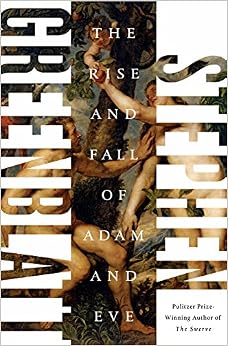
The story of Adam and Eve is the bedrock of the bedrock of Judeo-Christian-Islamic cultures. Most of us hear the tale of the Creation, the Garden,the Serpent, the Temptation, the Fall, and the Expulsion in one form or another in our earliest childhoods and again throughout our lives. For many of us at some point it slips into the category of Legend, though we often find it re-emerging with new significance in ways that other legends like Pandora's Box do not. Stephen Greenblatt's survey of the tale through history (primarily Western Christian history) is well written and thought provoking, providing us with fresh insights into its continuing significance.Greenblatt begins his history with the Babylonian Captivity of the Jewish people after their conquest and expulsion from the land of Israel. Weeping by the waters of Babylon, the Jews were exposed to the chaotic religious beliefs of their captors, in which gods and goddesses cavorted, fought, and struggled for supremacy. In an effort to distinguish their own monotheistic worship the Jews created their own stories, relying on old teachings and traditions and sometimes borrowing ideas from the other peoples to whom they were exposed. Eventually these stories became the foundation for what is now known as the Old Testament.Later on that foundation led to the rise of Christianity and Islam. Greenblatt does not spend much time dealing with Islamic traditions, his focus is on Western Christianity. He does a remarkable job of covering St. Augustine's influence on the development of Western theology and Adam and Eve's place in it, touches somewhat cursorily on medieval Christianity, then refocuses for another superb recapitulation of John Milton's influence. Moving from Milton through the Enlightenment, Greenblatt's next major emphasis is on Darwinism, finally finishing with a short epilogue dealing with chimpanzee societies in Uganda.Some may fault Greenblatt for being too cursorial, but given the breadth and importance of the subject his choice must have been between a multivolume work versus this relatively brief (300 pages plus another 100 of Appendices, Notes, and Bibliography) summarization. Although the book may be a bit short given its subject it is nevertheless full of important insights. The humanity of the story, the emphasis on Adam and Eve's freedom to choose, the sense of loss, and the odd re-echoes in our own world, where DNA evidence points to a common heritage for all of humanity are all beautifully covered in Greenblatt's beautiful prose. A book to read and reread and ponder.
The Rise and Fall of Adam and EveIf you are thinking about buying the Kindle version, be aware that the footnotes/endnotes are really screwed up. Normally, in the Kindle version, the location in the text for a footnote is indicated with a footnote number. There are no footnote numbers or any other indication that the text has a footnote. The footnotes are at the end of the book in a section called Notes. You can go to a footnote in that section and there is a link that will take you back to the page where the text is located for that footnote. But there is nothing to indicate while you are reading text that any of the text has a footnote related to the text. This is the screwiest thing I have ever encountered. I just don't understand why they could not have indicated that the text has a footnote related to it so that the reader can then go to the Note section and find the footnote (a link from the text into the footnote would be better, but there should be at least something to tell the reader as he is reading the text that there is a footnote related to the text).The footnotes are pretty good, but you have to work way to hard to meaningfully correlate them while you are reading the text.I strongly recommend that readers consider this issue if they are, like me, avid footnote readers.And, I recommend to Amazon if they read these comments, that it fix that problem. I have contacted Amazon and as best I understand their nonresponse, they have no interest in fixing it. They should do better for this book.
I was a little surprised by this book. I expected a discussion of the story of Adam and Eve, its historical interpretations, and the significance it still has on western thinking about our origins and our morality. And there is that, although Greenblatt discusses the hold that aspects of the story — original sin, the relationship between men and women, the dangers of pride, etc. — still have on western culture and morals less than I anticipated.What turned out to be more interesting was Greenblatt’s treatment of the story as an historical idea, especially its uneasy status between mythology and literal fact with the faiths that adhere to it.Greenblatt starts with historical context. I learned a lot here. The story as told in the Torah dates to the 5th century BCE. The Enuma Elish, from as early as the 18th century BCE, and the Epic of Gilgamesh, going back as far as 2100 BCE, not only predate Adam and Eve in some respects, they also provide a base to which the story responds.For example, in the Epic of Gilgamesh (the Sumerian creation story), man, once created, truly becomes man by joining the city of Uruk. Enikidu, the first man, becomes human by leaving the garden and joining the city — only by doing so does he become other than another wild animal.Somewhat similarly, in the Enuma Elish, the role of the city is emphasized as Marduk, the creator, approves the creation of the city of Babylon.By contrast, the story of Eden turns the relation between the garden and the city on its head — it is in the garden that Adam and Eve are their purist selves. It is only in their fallen state that they leave the garden, with their son, Cain eventually founding the city of Enoch. And of course, God punishes the city of Babylon with a proliferation of mutually unintelligible languages.There are other apparently deliberate positions or decisions taken by the story of Adam and Eve that respond to cultural and historical context — an insistence on strict obedience to God, pridefulness as sin, a hierarchical relationship between man and woman, the moral prominence of shame, and the status of labor as a punishment (although it does appear that Adam and Eve may have tilled the soil of Eden).Greenblatt discusses some of these aspects in depth, in historical interpretations given to them. He provides extended discussions of Augustine’s notion of “original sin†and of the historical treatment of Eve as primarily responsible for the fall.But it is his discussion of attempts at literal interpretation of the story that most engaged my interest, especially as attempted by Augustine and Milton, and aided by the artists of the Renaissance.There appears always to have been a spirit of interpretation of the story, and of Genesis in general, as allegorical or mythological, rather than literally true. But the pressure to strengthen the faith of believers such as Augustine and Milton produced successive attempts to articulate and defend the story as literally true. And these attempts figure critically in an historical decline in the significance of the story.Greenblatt believes that the story of Adam and Eve may be a victim of its own success — that is, it became vulnerable as it became believed in that literal sense. Through the efforts of Augustine, the artists of the Renaissance, and Milton, the story was pushed toward a modern kind of realism — literal factuality. Greenblatt writes, “The collective success of all of these efforts by believers — the triumphant fulfillment of the old Augustinian dream of a literal interpretation — had an unintended and devastating consequence: the story began to die.â€It became subject to the same kinds of questioning that any factual account is subject. What evidence stands for or against its truth? What about the internal consistency of the story?Then, in this context, skepticism could grow roots. Where did Cain’s wife come from, if Adam and Eve bore only two children, he and Abel? Where did the inhabitants of the city that Cain founded come from? How could Adam have named all the animals of the world in half a day? What should we make of the newly discovered peoples of the New World, who apparently did not participate in the shame of nakedness that was the consequence for all humans of Adam and Eve’s transgression? What of the apparent age of the world as implied by ancient documents of Greece and the Aztec artifacts discovered in the New World?I suspect that Greenblatt is tracing also an increasing split in general between the mythical and the factual, a distinction that if not peculiar to the post-Enlightenment world, is at least more sharply drawn from that point forward. Those questions were always available to any literal interpretation of Genesis, but they were not asked in the same spirit in which they required reduction to fact. Pre-Enlightenment, Augustine had certainly wondered about some of those same questions, and about the very idea of a talking snake, a magical tree, etc., but he took belief and faith as a challenge to be met. His literal interpretation of the story seems an aggressive expression of faith, rather than, in a later post-Enlightenment spirit, a sorting out of the facts.Greenblatt is clear that he thinks something is lost with the demise of the story’s standing, and I found his position at least somewhat persuasive. The story of Adam and Eve gave us a framework, if not always answers (or acceptable answers), to questions about freedom, knowledge, choice, innocence and guilt, responsibility, and much more. By contrast, the modern story of our descent from extinct hominins leaves those things largely untouched.Some do draw social Darwinism from the ironically mythologized version of evolution — “survival of the fittest†in Herbert Spencer’s words. Others look for the origin of human morality in our ancestors and closest relatives, the apes. But the former is cynical, reminiscent of Thrasymachus’s ill-fated version of justice in Plato’s Republic — “the advantage of the strongerâ€. And the latter is, at best, unfinished business and seemingly a very messy story from which to draw guidance for moral thought.It’s one thing to talk in generalities of an age of realism and fact. It’s another to show in some detail the evolution of one core component of western culture toward that age. By doing so, Greenblatt enables us to see, for better and for worse, how the role the story of Adam and Eve plays for us has changed.
PDF
EPub
Doc
iBooks
rtf
Mobipocket
Kindle
PDF
PDF
PDF
PDF